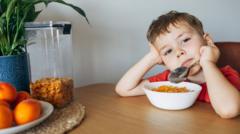
A headteacher has said she believes “families are going to struggle” as the price of school dinners is to increase for the second year in a row.
The price of meals for pre-school, primary and special school pupils will go up by 30p, for post-primary pupils will they will rise by 15%. It follows an increase of just under 20% introduced by the Education Authority (EA) in January 2026.
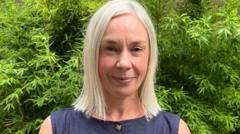
Áine Leslie, principal of Malone Integrated College in Belfast, said this will put further pressure on families who are already worried about the cost of living crisis.
But the EA said that the amount parents would have to pay was still well below the average cost of producing a school meal, estimated at over £5.20.
The latest increase will come into effect in January and means that the price of a paid for dinner in a primary school or special school, for instance, will have risen from £2.60 to £3.40 since the start of 2026.
Pupils eligible for free school meals will not be affected.
The rise in school dinner prices is not the only measure introduced by the EA in response to what they describe as “an exceptionally challenging financial position”.
There will also be a change to some menus in schools, replacing baked desserts with cheaper alternatives.
At Malone Integrated College about 55% of pupils have free school meal entitlement and there are also a lot of parents who are on lower incomes.
When the prices of school meals increased earlier this year, Leslie said she remembers “sitting with the head of the cafeteria and heartbreakingly decide how much to put up each item”.
“I think the cumulative effect of this will be immense, particularly families who have multiple children, both at a primary school and a post-primary school, and trying to make ends meet, it’s going to become incredibly difficult,” Leslie told BBC News NI.
“I can’t imagine what it would be like for families trying to budget that moving forward, as well as planning for Christmas.
“I firmly believe families are going to struggle at Malone.
“I do believe that there will be some families and some young people who will be worried about the stigma attached to this, and won’t voice their concerns and won’t ask for help. And as an integrated school, that’s really sad for us.
She added: “I think it’s going to be quite cutthroat for families.
“Already, we have some of our children, particularly in junior school talking about Christmas and how they’ve had discussions with their families that things are going to be much more scaled down this Christmas, just with the general cost of living crisis.
“And then this is only going to amplify the situation even more for young people.”
Leslie added that not having a healthy, balanced diet or going without food will be a “barrier to learning”.
Christos Gaitatzis is the principal of Omagh High and described the increase of 15% on a school meal as “excessive”.
“What is the price index at the moment – is it 3,4, 5%? I would imagine that would be the reasonable increase that you would put on anything, so they are going three times the value – to me it is unreasonable,” he told BBC News NI
Close to 30% of pupils at his school are on free school meals.
“You would expect that the cost for a child every week, when a price of a meal is close to £5, we are talking about £20 a week, £100 a month – that’s a significant cost for lunch,” Gaitatzis said.
“So other measures have to be taken by the families in order to make savings, for example pack lunches – then would that diet be balanced?
“We’re talking about a society where the importance of nutrition provided by schools has significant impact on your mental and physical health, so you effectively deter these families and children having these nutritious meals by putting the price up.
“Clearly this will have an overall future impact on the health of the kids.”