The run-up to the Budget typically sees speculation about what might be in it, which the government is trying to keep to a minimum this year.
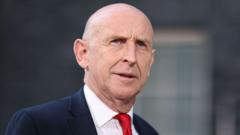
Healey and Prime Minister Andy Burnham face a difficult balancing act, trying to offer more support to households and meet commitments on defence spending, while also sticking to Labour’s manifesto commitments on tax and the government’s self-imposed fiscal rules.
The previous chancellor, Rachel Reeves, set out two main rules, which the new leadership has vowed to follow. These are:
-
Not to borrow to fund day-to-day public spending by the end of this parliament
-
To get government debt falling as a share of national income by the end of this parliament
In March, the OBR calculated that the first rule would be met with a gap – or headroom – of £23.6bn. However, this headroom is expected to have shrunk.
Analysts at KPMG believe it could have fallen to £12bn, mainly due to the rise in government borrowing costs this year.
However, one option that has been floated is Healey potentially accepting a smaller buffer, reducing the need to increase taxes in the Budget.
Your First Home scheme
Further details on the “Your First Home” scheme, aimed at helping first-time buyers in England to purchase a property, are expected to be announced in the Budget.
The scheme will allow people to buy a new-build home with a deposit of 2.5%. It would provide them with a loan worth 20% of their property’s value to help pay for the purchase.
Capital Gains Tax
There has been speculation that Capital Gains Tax – which is imposed on the profit people make when they sell an asset that has increased in value – could be changed, through either higher rates or by removing or amending exemptions.
Mansion Tax
The High Value Council Tax Surcharge – dubbed the Mansion Tax – was announced in last year’s Budget and will apply to properties in England valued above £2m from April 2028. However, reports have suggested the government is considering extending it to properties worth more than £1.5m.
Taxes on banks
Banks have been reporting bumper profits, leading to calls from unions to increase taxes on the sector. But banks have pushed back, suggesting heavier levies would undermine the government’s aim to boost growth and make the UK less competitive.
Fuel duty
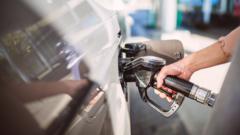
Fuel duty was frozen under the Conservatives in March 2022 and Sir Keir Starmer’s government continued the freeze, deciding in May to push back a planned 3p increase in September until the end of this year.
Healey told the BBC in late September that the “place” and “time” for dealing with rising petrol and diesel costs was the Budget, but would not give details on whether the freeze would be extended again.
In the first three months of the year, the UK’s economy grew by 0.6%, although it slowed to 0.4% in the April-to-June period.
The Office for National Statistics said that figure was “relatively robust”, with the UK growing faster than other G7 countries.
The most recent data showed the economy grew by 0.4% in July, which was much stronger than expected.
Analysts say the UK economy is proving resilient in the face of energy price shocks caused by the US-Israel war with Iran.
The conflict has led to the effective closure of the Strait of Hormuz, a key waterway for oil and gas trade. This caused a sharp jump in oil prices, which has fed through to higher energy and fuel prices.
Economists expect UK growth to slow in the months ahead as those costs continue to weigh on households and businesses.
Prices for goods and services are still rising faster than wanted. Inflation hit 3.1% in the year to August, the highest rate in five months, and above the Bank of England’s 2% target, driven by higher petrol and diesel prices.
The Bank of England held interest rates at 3.75% for the sixth time in a row in September, but said they were likely to rise if high energy prices persist.